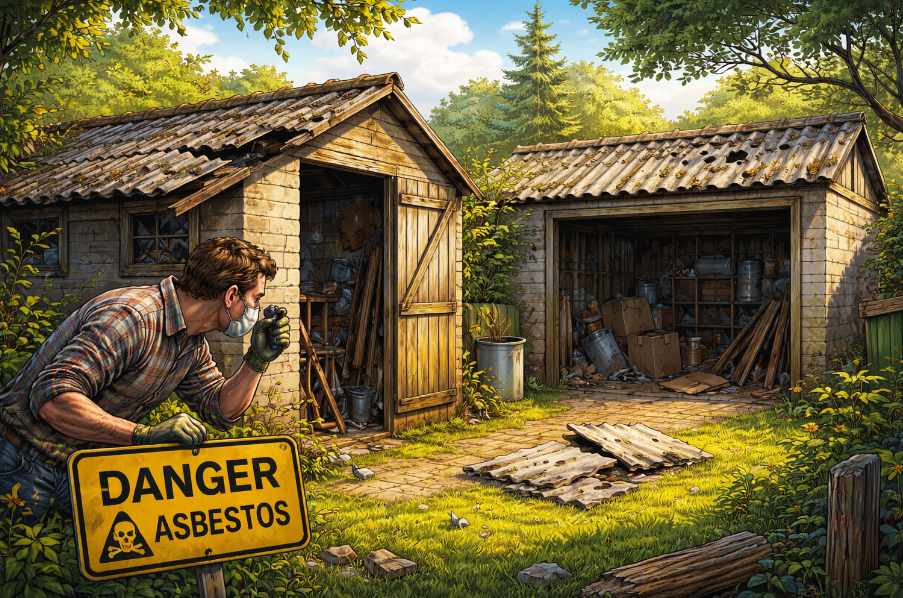
While it may not announce itself with flashing lights or ominous music, asbestos can quietly exist in plain sight. Understanding where it hides and how to handle it properly can make all the difference between a routine garden tidy-up and an unnecessary health risk.
Where Asbestos Likes to Lurk Outdoors
Outdoor structures built several decades ago often used asbestos-containing materials because they were durable, fire-resistant, and relatively inexpensive. Unfortunately, those same qualities mean it has stuck around longer than anyone would prefer.Common places where asbestos may be found include:
- Corrugated roofing sheets on sheds and garages
- Wall panels or cladding on older outbuildings
- Cement boards used in fencing or partitioning
- Old drainage pipes or guttering
Recognising the Signs Without Playing Detective
Spotting asbestos is not as simple as identifying a particular colour or texture. It doesn’t come with a helpful label, and guessing based on appearance alone is unreliable. That said, there are a few clues that can raise suspicion.Older materials that are fibrous, brittle, or cement-like in appearance—especially in structures built before the late twentieth century—should be approached cautiously. If a shed roof looks like it has seen more decades than you have birthdays, it’s worth pausing before climbing up for repairs.
Crucially, the real risk comes when asbestos-containing materials are disturbed. Drilling, cutting, sanding, or breaking them can release fine fibres into the air. These fibres are not visible to the naked eye, which makes them particularly troublesome. It’s not the kind of dust you can simply brush off your trousers and forget about.
When Curiosity Should Take a Back Seat
There is a natural temptation to investigate suspicious materials more closely. After all, how bad could it be to just poke it lightly with a screwdriver? The answer is: not a great idea.Disturbing potentially hazardous materials without proper precautions can increase the risk of exposure. Even minor actions, like scraping or breaking a small section, can release fibres. This is one situation where restraint is far more valuable than enthusiasm.
If there is any uncertainty, the safest course of action is to leave the material undisturbed. It may not be as satisfying as solving the mystery on the spot, but it is considerably safer.
Safe Handling Starts with Knowing Your Limits
Managing asbestos is not about bravado or DIY heroics. It requires careful planning, appropriate equipment, and in many cases, professional expertise. For homeowners tackling garden renovations, this means recognising when a job exceeds the boundaries of safe DIY.Simple precautions can reduce risk in situations where materials are confirmed to be safe or already managed:
- Avoid drilling or cutting into suspect materials
- Keep surfaces intact and undamaged
- Limit access to areas where materials are present
- Use appropriate protective equipment if advised
Garden projects are meant to improve outdoor spaces, not introduce hidden risks. A cautious approach may feel less adventurous, but it tends to result in far fewer surprises—and significantly less unwanted excitement.
Professional Help Is Not an Overreaction
There is a certain pride that comes with fixing things yourself. Replacing a fence panel, repairing a shed roof, or clearing out an old garage can feel like a productive weekend well spent. However, asbestos is one of those rare cases where calling in professionals is not a sign of defeat—it is a sign of good judgement.Licensed specialists can carry out surveys to confirm whether asbestos is present and assess its condition. This removes the guesswork entirely. Instead of wondering whether that suspicious panel is harmless or hazardous, you get a clear answer backed by proper testing.
When removal is necessary, trained teams follow strict procedures to contain and dispose of materials safely. They use specialised equipment, protective clothing, and controlled methods to prevent fibres from spreading. It is not the kind of task suited to a pair of gardening gloves and optimistic determination.
There is also a practical advantage. Proper handling ensures compliance with regulations, which can be particularly important when selling a property or undertaking larger renovations. Quietly ignoring the issue tends to create louder problems later.
Planning Garden Projects with Safety in Mind
Garden upgrades often begin with simple intentions—perhaps a new seating area, a larger shed, or finally tackling that leaning fence that has been pretending to be “rustic” for years. When older structures are involved, a little planning can prevent complications.Before starting any work, it is worth considering the age and materials of existing features. If there is any possibility of asbestos, arranging a survey early in the process can save time, money, and unnecessary disruption.
This approach also allows for better decision-making. Instead of halting a project halfway through because something unexpected has appeared, you can move forward with confidence, knowing that any risks have already been addressed.
It also helps avoid the classic scenario of beginning a small task that mysteriously expands into a full-scale operation. One moment you are fixing a panel, the next you are standing in the garden wondering how everything escalated so quickly.
Storage Spaces That Deserve a Second Look
Sheds and outbuildings are often treated as afterthoughts—places to store tools, forgotten equipment, and items that might come in handy someday. Because of this, they rarely receive the same level of attention as the main house.That makes them ideal hiding places for older materials. Over time, repairs may have been carried out using whatever was available, sometimes without full awareness of what those materials contained. Layers of patchwork fixes can mask the original construction, making it harder to identify potential risks.
Taking the time to properly assess these spaces can reveal more than just long-lost tools. It provides an opportunity to ensure that everything is safe, stable, and fit for purpose. It may not be the most glamorous part of gardening, but it is certainly one of the most worthwhile.
A Shed Load of Common Sense
Managing asbestos in outdoor spaces ultimately comes down to awareness, caution, and sensible decision-making. Not every old structure contains hazardous materials, but assuming everything is harmless is a gamble that rarely pays off.A measured approach—identifying risks, avoiding unnecessary disturbance, and seeking professional guidance when needed—keeps garden projects on track without introducing avoidable problems. It also ensures that outdoor spaces remain enjoyable rather than concerning.
A well-maintained garden should be a place of relaxation, not a source of hidden worry. With a bit of attention and the right approach, even the most cluttered shed can return to being exactly what it was meant to be—a storage space, not a surprise package.
Article kindly provided by westcountryasbestos.co.uk