Trees do considerably more than provide somewhere for birds to argue at six in the morning. They influence temperature, humidity, wind movement and soil conditions, creating small but important microclimates. Understanding these relationships can help homeowners avoid unpleasant surprises when planning tree removal.
How Trees Create Their Own Cooling Systems
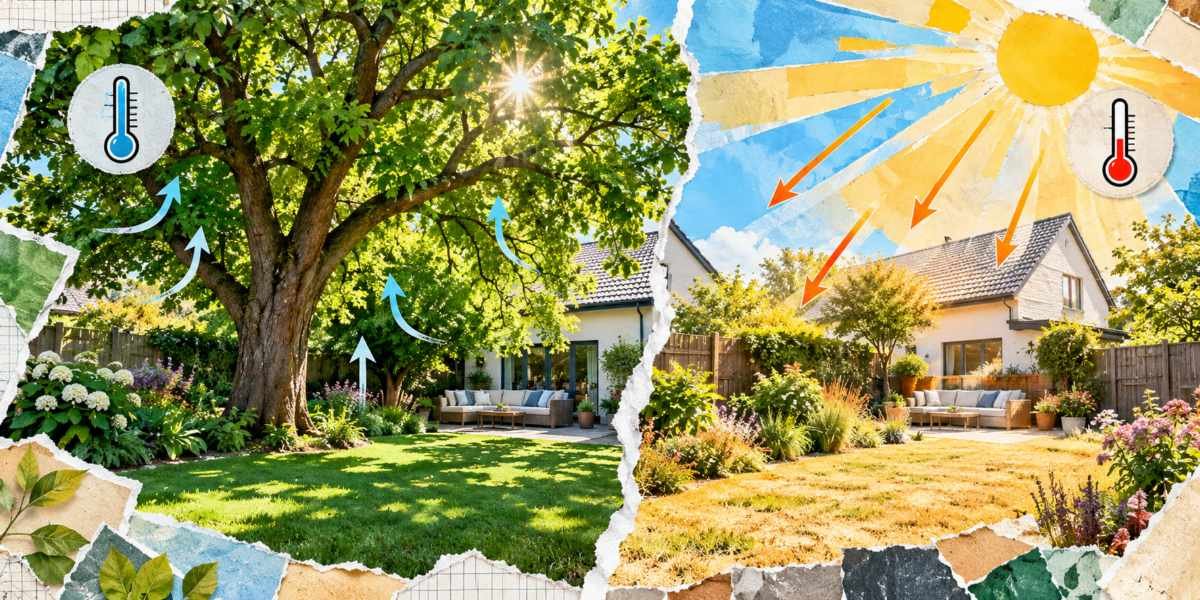
A mature tree works rather like a natural cooling system, although it doesn’t come with a remote control or an annual servicing contract. Its canopy intercepts sunlight, preventing much of that energy from reaching the ground directly. Shaded surfaces absorb less heat, which can make the surrounding garden noticeably more comfortable during warm weather.However, shade is only part of the equation. Trees also cool their surroundings through transpiration, a process in which water absorbed by the roots travels through the tree and evaporates from its leaves. This evaporation consumes heat energy, helping reduce leaf temperatures and influencing the immediate surrounding air.
The cooling effect varies according to tree species, canopy size, available water and local weather conditions. Nevertheless, a large, healthy tree can make a meaningful difference to the temperature experienced beneath its branches.
Why Your Lawn Might Suddenly Struggle
Removing a tree dramatically changes the amount of sunlight reaching the grass below. Initially, this might seem beneficial, particularly if the lawn previously struggled in heavy shade. More sunlight can encourage stronger growth in grass species that prefer bright conditions.Unfortunately, additional sunshine also increases evaporation from the soil. Grass accustomed to partial shade may suddenly face longer periods of direct heat, increasing its water requirements. During dry weather, previously healthy patches can become brown, thin or stressed.
The soil itself may also change. Tree roots influence moisture distribution and soil structure, while fallen leaves contribute organic material as they decompose. Removing the tree alters these relationships, although the effects depend heavily on the existing soil and vegetation.
Homeowners should monitor moisture levels after removal rather than automatically increasing watering. Overwatering can create problems of its own, and replacing one gardening headache with another is rarely considered progress.
Wind Can Become an Unexpected Visitor
Large trees act as natural windbreaks, slowing and redirecting air movement around gardens, buildings and neighbouring vegetation. Their removal can expose previously sheltered areas to stronger gusts.This matters particularly for delicate plants, climbing vegetation and outdoor seating areas. Increased airflow may accelerate moisture loss from leaves and soil, while stronger winds can damage plants that developed in relatively protected conditions.
Wind changes can also affect comfort in less obvious ways. A newly exposed patio might become pleasantly breezy during summer but considerably less inviting during colder months. Garden furniture may discover an unexpected enthusiasm for travelling.
Before removing a substantial tree, consider which parts of the property currently benefit from its shelter. Understanding prevailing wind directions can help identify where replacement planting or alternative screening might be useful.
How Tree Removal Can Affect Household Cooling Costs
A tree doesn’t need to touch a building to influence its indoor temperature. Mature trees positioned near houses can shade walls, windows and roofs, reducing the amount of solar heat absorbed during warmer months. Remove that protection, and previously shaded surfaces may receive several additional hours of direct sunlight.West-facing windows are particularly vulnerable because afternoon sunshine arrives when outdoor temperatures are often already high. Without adequate shading, rooms may become warmer, increasing demand for air conditioning. Even households relying on fans and natural ventilation might notice a difference.
However, the relationship isn’t entirely one-sided. In colder climates, removing a tree can allow more winter sunshine to reach the property, potentially reducing heating requirements. The overall effect depends on the building’s orientation, insulation, local climate and the tree’s position.
Before removing a large tree near the house, observe which windows and walls it shades throughout the day. That seemingly inconvenient collection of branches might be performing a surprisingly valuable service.
Choosing Replacement Plants That Actually Help
Replacing a mature tree with three tiny shrubs might improve the appearance of an empty space, but it won’t immediately restore the original microclimate. Large trees provide cooling benefits through their extensive canopies, something smaller plants cannot instantly replicate.When selecting replacement vegetation, consider eventual height, canopy spread, root behaviour and water requirements. Native or locally adapted species are often sensible choices because they are better suited to regional growing conditions.
Deciduous trees can be particularly useful in temperate climates. Their leaves provide summer shade while allowing more sunlight through during winter. Evergreen species, meanwhile, can offer year-round screening and wind protection.
For quicker results, homeowners might combine young trees with pergolas, climbing plants and strategically positioned shrubs. A layered planting approach can provide shade at different heights while supporting biodiversity and improving the garden’s appearance.
Just remember that the charming little sapling beside the driveway may eventually become a substantial tree. Future growth deserves considerably more attention than its current ability to fit inside a shopping trolley.
Planning Removal Without Creating New Problems
Sometimes tree removal is unavoidable. Structural instability, serious disease, storm damage or interference with essential infrastructure can make retaining a tree impractical or unsafe. However, removal should ideally involve considering the wider landscape rather than focusing exclusively on the tree itself.Where appropriate, professional assessment may identify alternatives such as selective pruning or crown reduction. These measures cannot resolve every problem, but they may preserve valuable shade and shelter when the tree is otherwise healthy.
If removal is necessary, plan replacement planting before work begins. Identify areas likely to experience increased sunlight, stronger winds or changing soil moisture. Consider temporary shade for vulnerable plants and adjust irrigation according to actual conditions.
A Little Less Tree Can Mean a Lot More Degrees
A mature tree quietly influences its surroundings every day, regulating sunlight, moderating moisture and shaping airflow without attracting much attention. Its disappearance can reveal just how much work it was doing.Thoughtful planning makes those changes easier to manage. By understanding the garden’s existing microclimate and choosing suitable replacement vegetation, homeowners can preserve comfortable outdoor spaces while accommodating necessary changes.
After all, removing a tree should ideally give you a better garden, not transform your favourite afternoon seating area into the surface of Mercury.
Article kindly provided by lawnandtreesalon.com