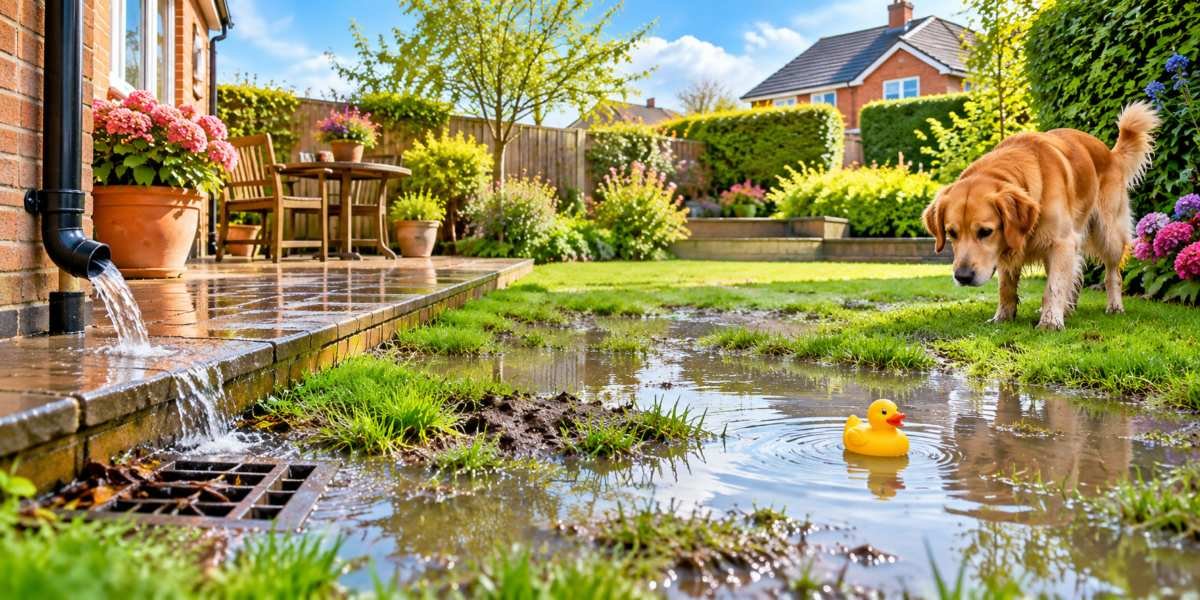
Garden flooding is not always caused by excessive rainfall. Underground drainage failures, compacted soil, badly positioned paving and changes to surrounding ground levels can all prevent water from escaping. Sometimes the problem has been developing for years, becoming noticeable only when a relatively ordinary shower exposes the garden’s inability to cope.
When the Ground Refuses to Cooperate
Healthy garden soil contains tiny spaces between its particles, allowing rainwater to infiltrate and gradually move downwards. Unfortunately, those spaces can disappear when soil becomes heavily compacted through construction work, repeated foot traffic or the enthusiastic deployment of heavy landscaping equipment.Clay-rich soils present additional difficulties. Their fine particles restrict drainage, particularly when the ground is already saturated. Water can remain close to the surface long after rainfall has stopped, creating persistent muddy patches and struggling plants.
A simple observation can help distinguish natural soil limitations from drainage failures. If waterlogging occurs across broad areas after prolonged wet weather, soil conditions may be responsible. However, a permanently saturated patch surrounded by reasonably dry ground deserves closer investigation.
Compacted ground can sometimes benefit from aeration, improved soil structure and carefully planned planting. More serious problems may require dedicated drainage systems. Pouring several bags of sand onto a clay lawn, incidentally, is unlikely to transform it into a Mediterranean beach.
Could Your Patio Be Sending Water in the Wrong Direction?
Patios, driveways and paved pathways significantly influence how rainwater moves through residential gardens. Unlike lawns and planting beds, conventional impermeable paving prevents water from soaking directly into the ground.A properly designed patio incorporates a gentle fall that directs surface water towards suitable drainage arrangements. Problems arise when paving slopes towards the house, discharges onto already saturated lawns or traps water against retaining walls.
Garden renovations can also unintentionally alter established drainage patterns. Raising a patio, installing artificial grass or replacing planting beds with paving may redirect rainfall towards areas that previously remained dry. The finished garden might look magnificent in photographs while quietly preparing the foundations for its own boating lake.
What Lies Beneath the Puddles?
Not every drainage problem begins at ground level. Blocked gullies, damaged underground pipes and poorly connected surface water drains can prevent rainfall from leaving the property efficiently.Leaves, sediment, moss and accumulated debris frequently obstruct garden gullies. Underground pipework can also become damaged through ground movement, ageing joints or root intrusion, creating localised saturation and occasional subsidence concerns.
A particularly suspicious warning sign is persistent wet ground during otherwise dry weather. This may indicate leaking water supply pipes, defective drainage connections or wastewater escaping underground. Such conditions should not be dismissed as ordinary garden dampness, especially when accompanied by unusual odours or unexplained increases in water consumption.
When Your Neighbour’s Garden Becomes Part of the Problem
Water does not respect property boundaries, garden fences or carefully worded conversations about whose responsibility the hedge might be. It simply follows gravity, moving from higher ground towards lower areas unless suitable drainage arrangements intervene.Changes to neighbouring gardens can therefore affect your property. Raised patios, new retaining walls, extensive paving and altered ground levels may redirect surface water towards previously unaffected areas. Even relatively minor landscaping projects can change how rainfall travels across several adjoining gardens.
Before installing drainage channels or raising your own ground levels, establish where the water originates and where it can safely discharge. Redirecting unwanted water into a neighbour’s garden is neither a satisfactory engineering solution nor an especially promising foundation for harmonious relations.
Local drainage regulations, property boundaries and existing drainage rights should be considered before undertaking substantial alterations.
Finding the Source Before Digging Everything Up
Effective drainage repairs begin with identifying the actual cause rather than immediately excavating half the garden. Several straightforward observations can provide valuable clues.Notice whether puddles appear immediately after rainfall or develop gradually. Check whether water collects around gullies, inspection chambers, downpipes or particular sections of underground drainage. Examine whether the affected ground remains wet during extended dry periods.
Blocked surface gullies may be cleared relatively easily, provided they are safely accessible. However, suspected underground pipe damage often requires professional investigation. Drainage specialists can use CCTV equipment to inspect buried pipes, identify obstructions and locate structural defects without turning the entire lawn into an archaeological excavation.
Where a leaking water supply is suspected, prompt professional attention is important. Persistent underground leaks can waste considerable quantities of water and potentially undermine surrounding ground.
Choosing Drainage Solutions That Actually Work
Different causes require different remedies. French drains, incorporating perforated pipes surrounded by suitable drainage aggregate, can collect and convey excess groundwater where site conditions permit. Channel drains can intercept runoff from patios and driveways, while permeable paving may reduce the amount of water travelling across hard surfaces.Soakaways offer another possibility, but their effectiveness depends on soil permeability, available space and appropriate separation from buildings and other structures. Installing a soakaway in ground that barely absorbs water is rather like purchasing a sponge made from concrete.
Every drainage system also needs a suitable destination for collected water. Connections to existing drainage networks may require approval, and surface water should not automatically be discharged into foul sewers. Professional advice is particularly valuable where groundwater levels, neighbouring properties or building foundations complicate the design.
Getting to the Bottom of the Puddle
Persistent garden flooding should never be treated as merely an inconvenience. Prolonged saturation can damage planting, weaken paved surfaces, create slippery conditions and contribute to moisture problems around buildings. Where water repeatedly accumulates against external walls, investigating drainage and ground levels becomes especially important.The most reliable approach combines careful observation, appropriate investigation and drainage improvements designed around the property’s actual conditions. A successful solution manages water without simply transferring the problem elsewhere.
After all, the purpose of a residential garden is generally to provide somewhere to relax, grow plants and occasionally complain about the weeds. If keeping ducks has become a realistic alternative, it is probably time to investigate the drainage.
Article kindly provided by safeplumbersglasgow.com