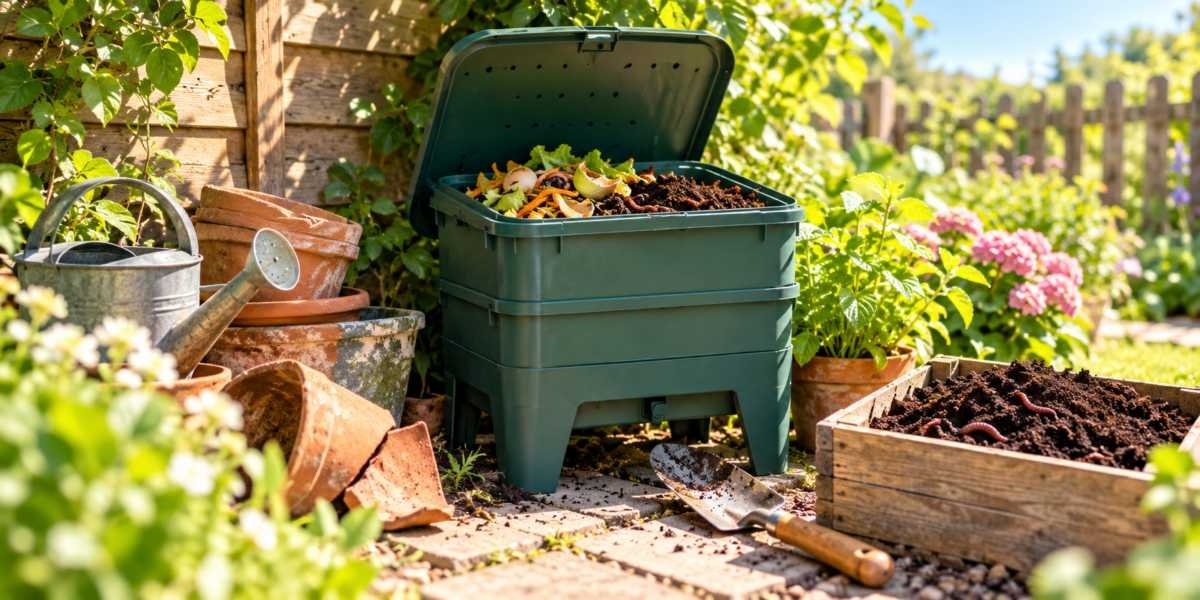
Worm composting does not require a large garden, elaborate equipment or an industrial quantity of vegetable peelings. A modest container and a suitable population of composting worms can process small amounts of organic waste while producing nutrient-rich worm castings for use around the garden. The important part is creating conditions in which the worms can get on with their work without being cooked, drowned, frozen or accidentally buried beneath Tuesday night’s entire dinner.
Finding the Right Forgotten Corner
Position matters because composting worms prefer relatively stable conditions. A location receiving some shade is generally more suitable than a spot exposed to strong sunshine throughout the day. Against a sheltered wall, beside a shed or beneath established planting may provide a useful home, provided the wormery remains accessible.Accessibility is easily underestimated. Putting a wormery behind six thorny shrubs might provide excellent shade, but enthusiasm for recycling kitchen peelings tends to decline after the third minor injury. Ideally, the container should be somewhere convenient enough to visit regularly while remaining protected from harsh weather.
Drainage also matters. Avoid positioning the wormery where heavy rain routinely collects. Although worms need moisture, they also need oxygen. Permanently saturated conditions can turn a productive wormery into an unpleasant anaerobic container whose arrival is announced by smell several metres before anyone actually sees it.
Choosing a Suitable Container
A mini wormery can be housed in a purpose-made worm bin, but gardeners can also adapt suitable sturdy containers. The container needs enough ventilation to allow air circulation while retaining moisture and excluding excessive rain. A lid is particularly useful outdoors, both for weather protection and for discouraging curious animals from conducting their own investigation.Opaque containers are preferable because worms naturally avoid light. Drainage must also be considered so that excess liquid cannot accumulate at the bottom. The precise arrangement will depend on the type of container, but the objective remains the same: damp, aerated bedding rather than a miniature swamp.
Start with suitable moist bedding material such as shredded cardboard, paper and partially decomposed organic matter. It should feel damp rather than dripping wet. Composting worms, including species commonly sold for wormeries, spend much of their time within rich organic material rather than tunnelling deeply through ordinary mineral soil.
Dinner Is Served Slowly
Once established, a small wormery can accept a useful range of household organic material. Fruit and vegetable scraps, coffee grounds and small quantities of other suitable plant-based kitchen waste can gradually be added. Chopping larger pieces increases the surface area available to microorganisms, which begin breaking material down before and alongside the worms.The key word is gradually. A newly established mini wormery should not receive a week’s worth of food simply because there appears to be room. Worm populations and microbial activity need time to develop. Add modest amounts initially and observe how quickly previous material disappears before increasing the supply. A wormery is a recycling system, not a vegetable-peeling storage facility with employees.
Certain materials should be avoided or kept to very limited quantities. Meat, fish, dairy products and oily cooked foods can create smells and attract pests, while large amounts of highly acidic material may disturb the conditions inside the bin. Keeping the diet varied and moderate makes maintaining a healthy system considerably easier.
Getting the Moisture Balance Right
Moisture is one of the most important parts of successful worm composting because worms breathe through their skin and need a damp environment. The contents should generally resemble a wrung-out sponge: noticeably moist when handled, but not releasing streams of water when squeezed.If the material becomes too dry, add a little water or moisture-rich food and check whether the wormery is receiving too much heat or ventilation. If everything becomes soggy, add dry shredded cardboard or paper and make sure drainage holes have not become blocked. Persistent wetness may also indicate that too much food is being added, particularly watery fruit and vegetable scraps.
A layer of damp cardboard or similar bedding material over the surface can help retain moisture while keeping conditions dark. It also provides another source of carbon-rich material and gives the worms somewhere comfortable to congregate. Apparently, several hundred worms under a piece of cardboard counts as desirable garden management rather than a reason to telephone someone.
Keeping the Weather Outside
Outdoor wormeries experience greater temperature fluctuations than indoor systems, so their position becomes particularly important. Prolonged direct sunlight can heat a container surprisingly quickly, especially if it is dark coloured. Moving it into deeper shade during very hot periods or providing additional protection can prevent dangerous overheating.Cold weather requires similar attention. Worm activity naturally slows as temperatures fall, but severe or prolonged freezing conditions can threaten the population. In colder climates, an outdoor wormery may benefit from insulation using cardboard, straw or other suitable materials around the container. A sheltered location close to a building can also moderate temperature changes.
The objective is not to maintain one perfect temperature every hour of the year. It is to avoid extremes and sudden changes. Worms are reasonably adaptable when given appropriate bedding, food, moisture and shelter, but there are limits to what even the most dedicated composting workforce will tolerate.
Knowing When Things Are Working
A healthy wormery should gradually develop dark, crumbly material as the original bedding and food waste are processed. Unpleasant smells are usually a warning rather than an unavoidable feature. A strong rotten odour can indicate excessive feeding, poor aeration or waterlogged conditions, all of which are reasons to investigate rather than simply putting the lid back on and walking away briskly.Worm castings can eventually be harvested and used around garden plants, mixed with other growing media or applied as a modest soil amendment. Harvesting methods vary according to the container, but there is no need to remove every last casting at once. Leaving some established material behind helps preserve the biological community when fresh bedding and food are introduced.
Patience is useful. A mini wormery is not a high-speed waste disposal machine, and its capacity depends partly on the size of the worm population and environmental conditions. Feeding according to what the worms are actually processing is far more effective than attempting to meet an arbitrary timetable.
Worming Your Way Into a Better Corner
That neglected patch beside the shed may never become the glamorous centrepiece of the garden, but that is rather the point. Worm composting can operate quietly in a small area that might otherwise contribute little beyond storing objects destined to remain “potentially useful” until approximately 2047.With a suitable container, shade, ventilation, controlled moisture and sensible feeding, a forgotten corner can become a small recycling system producing useful organic material for the rest of the garden. It turns kitchen scraps into something valuable, requires relatively little space and gives an otherwise redundant patch a genuine purpose. The cracked pots can stay if they must. They have seniority.
Article kindly provided by thewormhub.co.uk – fishing worms