Clearing a neglected garden is tempting, particularly when armed with a powerful strimmer and an unreasonable amount of enthusiasm. However, charging into the undergrowth without investigating what’s already there can destroy valuable features, damage established plants and create expensive problems. A little detective work before the serious clearance begins can save considerable time, money and regret.
Start With a Survey, Not a Chainsaw
Before removing anything substantial, walk around the garden and examine its layout. Look for changes in ground level, unusual straight lines beneath vegetation and areas where plants appear to grow differently. These can indicate buried paths, old borders, drainage channels or former structures.Take photographs from several angles and sketch a rough plan. Mark the positions of trees, shrubs, visible paving, walls and anything that looks potentially interesting. Even a basic drawing helps establish what deserves further investigation.
Proceed cautiously around dense vegetation, particularly where broken glass, discarded metal or unstable structures might be concealed. Wear sturdy footwear and gloves, and avoid reaching blindly into overgrown areas. A neglected garden can contain considerably more than weeds, including wildlife that would prefer not to participate in your renovation project.
Discovering Forgotten Paths and Patios
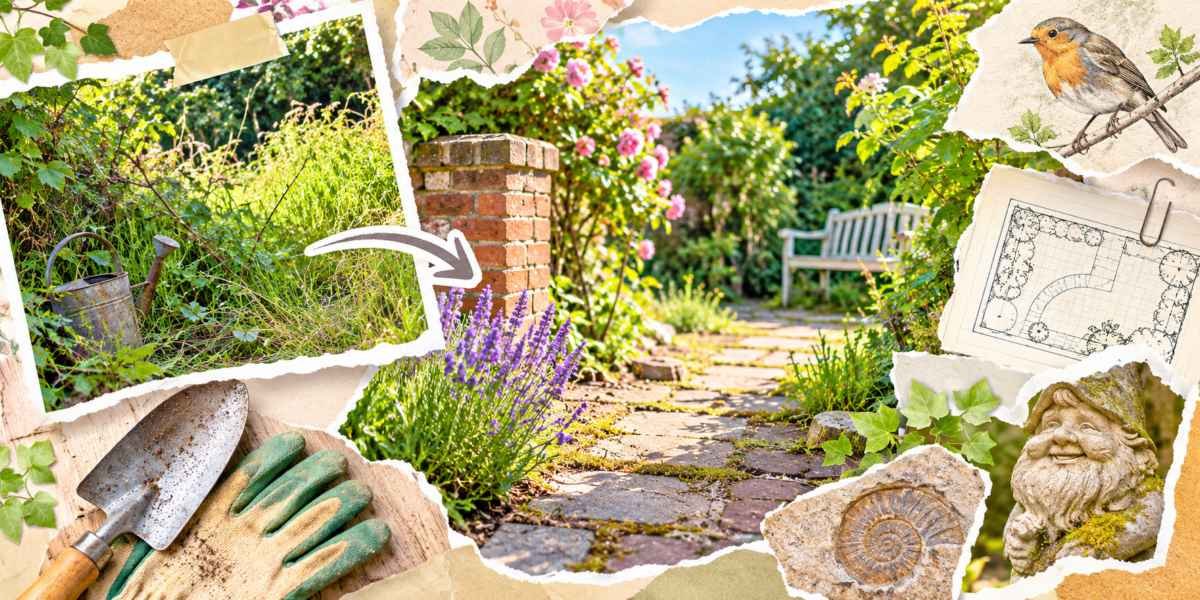
Old pathways are among the most rewarding discoveries during garden clearance. Previous owners may have installed attractive brickwork, natural stone paving or decorative stepping stones that gradually disappeared beneath soil and vegetation.Use a hand trowel or small garden fork to investigate suspiciously firm areas, removing surface growth carefully rather than immediately digging deeply. Once paving is exposed, assess its condition before deciding whether replacement is necessary.
Older materials often possess character that modern alternatives struggle to reproduce. Weathered bricks and natural stone can look particularly attractive after cleaning, although loose or uneven surfaces may require resetting to eliminate trip hazards.
Restoring an existing pathway can also be considerably cheaper than purchasing materials and constructing an entirely new one. Sometimes the previous gardener did all the expensive work decades ago. Your contribution is simply finding it.
Plants That Deserve a Second Chance
Not every plant in an overgrown garden is an unwelcome intruder. Established perennials, flowering bulbs and mature shrubs can survive years of neglect, often hidden beneath more aggressive vegetation.Look for recognisable foliage, old flower stems and clusters of emerging shoots. Photograph unfamiliar plants and identify them before removal. Some valuable species remain dormant for significant portions of the year, making seasonal observation particularly useful.
A mature peony, established rose or thriving clump of ornamental grasses could take years to replace successfully. Preserving healthy specimens provides an immediate foundation for the restored garden, while avoiding the expense of buying new plants.
Old Drainage Systems and Buried Surprises
One of the less glamorous discoveries beneath an overgrown garden is an old drainage system. Previous owners may have installed underground pipes, gravel trenches, soakaways or drainage channels to manage excess rainwater.Look for shallow depressions, unusually damp patches and areas where vegetation grows noticeably more vigorously. These can indicate underground drainage features, although they might equally suggest leaking pipes or naturally waterlogged soil.
Before undertaking substantial excavation, establish where underground utilities and drainage pipes are located. Damaging a functioning system could transform an inexpensive garden restoration into a plumbing adventure nobody particularly wanted.
Existing drainage arrangements should be assessed before being disturbed. Even an apparently crude gravel trench might perform an important function, particularly where surrounding ground slopes towards buildings.
Walls, Borders and Forgotten Garden Features
Dense vegetation frequently conceals low retaining walls, decorative edging, raised beds and other structural features. Some may have been deliberately abandoned, while others simply disappeared as surrounding plants expanded.Carefully removing ivy and climbing vegetation can reveal attractive brickwork or stone structures. However, avoid aggressively pulling established roots from old walls, as this can dislodge weakened mortar and masonry.
Inspect retaining walls for bulging, significant cracks or movement before attempting repairs. Structures supporting substantial quantities of soil may require professional assessment, particularly when located near buildings or neighbouring properties.
Occasionally, garden clearance reveals more eccentric discoveries, including ornamental statues, buried containers or mysterious concrete foundations. Finding a garden gnome is one thing. Discovering that somebody apparently constructed a miniature motorway beneath the lawn raises rather more questions.
Clear Gradually and Keep Materials Separate
A staged clearance allows discoveries to influence subsequent decisions. Begin by removing obvious rubbish, cutting back invasive growth and exposing the garden’s basic structure. Avoid immediately stripping every area down to bare soil.Separate green waste, timber, metal, rubble and potentially reusable materials as work progresses. This makes recycling and disposal easier while preventing useful discoveries from disappearing into an enormous pile of vegetation.
Check for nesting birds and other wildlife before disturbing hedges, dense shrubs or accumulated debris. Active bird nests are legally protected in the UK, and certain other species and habitats may require additional precautions.
Where possible, retain established trees and healthy shrubs until the final garden layout becomes clearer. Their shade, screening and contribution to biodiversity may be difficult or expensive to replace.
Digging Up the Past Without Burying Your Budget
The greatest advantage of investigating a neglected garden is discovering what can be reused. Existing paving, established plants, functional drainage and sound structural features can substantially reduce restoration costs.Rather than imposing an entirely new design immediately, consider adapting the garden around its surviving features. A forgotten brick pathway might determine the position of new planting beds, while a mature shrub could become an attractive focal point.
Allow time for discoveries to influence the project. What initially appears to be an expensive clearance operation might gradually become a sympathetic restoration of something surprisingly worthwhile.
After all, garden archaeology isn’t necessarily about uncovering ancient civilisations. Sometimes the greatest discovery is that the previous owner actually knew what they were doing, even if their gardening enthusiasm eventually surrendered to the nettles.
Article kindly provided by rainbowrubbishremovals.co.uk