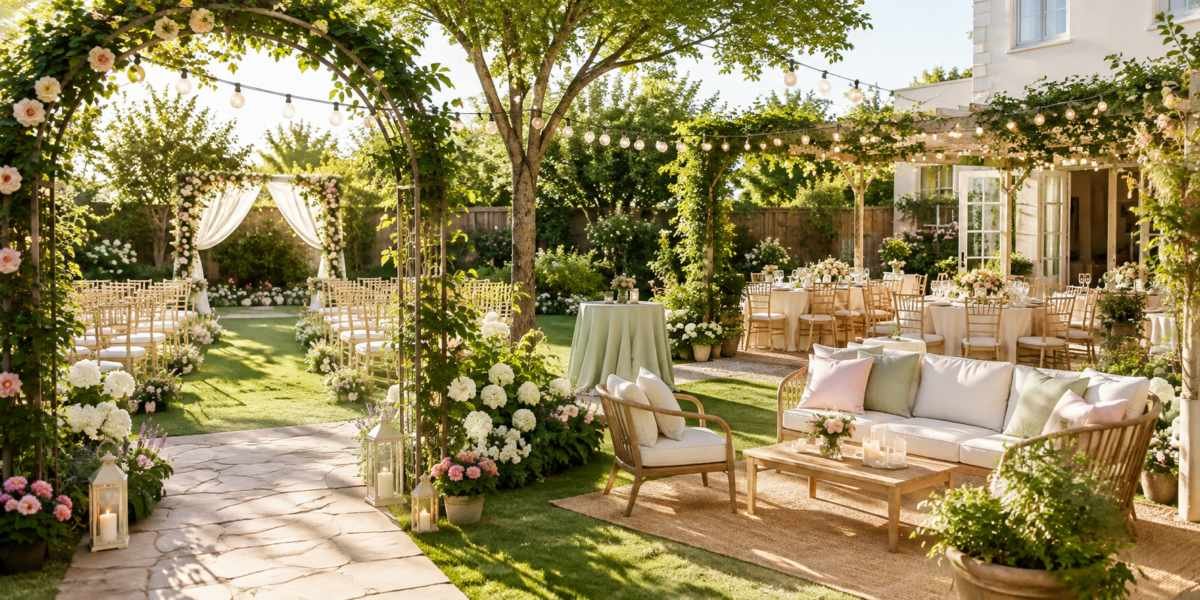
Creating that feeling is not about squeezing as many chairs as possible into every available patch of grass. The real goal is to make the space feel relaxed, easy to move around and inviting from the moment guests arrive until the final farewell. Size matters far less than thoughtful planning, and many intimate weddings feel warmer and more memorable than celebrations spread across enormous grounds.
Guest Flow Matters More Than Garden Size
People naturally follow visible pathways, even when there are no actual paths. Thinking about how guests will enter, gather, sit, eat and mingle prevents the space from feeling crowded. Instead of treating every square metre as usable standing room, it helps to create gentle movement between different areas.A simple route from the entrance to the ceremony space should remain clear throughout the day. Guests appreciate knowing where to go without needing directions every few minutes. Nobody enjoys accidentally wandering into the catering area while searching for the wedding arch.
Keeping circulation routes open often makes a compact garden appear noticeably larger. Empty space is not wasted space. It gives the eye somewhere to rest and allows groups to move naturally without creating awkward bottlenecks near gates, patios or narrow corners.
Creating Distinct Areas Without Building Walls
Dividing the garden into gentle zones gives every section its own purpose while maintaining an open atmosphere. Rather than separating spaces with solid barriers, subtle visual cues work far better.Different surfaces, rugs, planters or arrangements of potted flowers can quietly define areas for the ceremony, drinks, dining and conversation. Guests instinctively recognise these changes without feeling confined.
Even existing garden features can become useful landmarks. A mature tree may frame the ceremony, while a patio naturally becomes the dining area and a lawn provides space for relaxed socialising later in the evening.
Selective decoration also helps establish boundaries. Repeating similar colours across the garden keeps everything connected while allowing each area to retain its own character.
Furniture That Works With the Garden
Large furniture can make even generous gardens appear cluttered. Choosing lighter seating with slimmer profiles immediately opens the view across the space.Flexible seating arrangements often outperform rigid rows that remain fixed throughout the day. Benches, folding chairs and smaller café-style tables allow sections of the garden to adapt as the celebration progresses.
- Leave generous walking routes between seating groups.
- Use round tables where practical to improve movement.
- Position furniture to encourage conversation rather than block views.
- Avoid filling every corner simply because it exists.
Even practical items deserve attention. Gift tables, speakers, drinks stations and decorative displays should support the layout instead of becoming unexpected traffic islands where everyone suddenly finds themselves standing shoulder to shoulder wondering who is supposed to move first.
Lighting That Expands the Evening
As daylight fades, lighting quietly changes how large a garden feels. Bright floodlights may reveal every blade of grass, but they often flatten the atmosphere and make the edges of the garden feel more obvious. Softer layers of light encourage the eye to focus on welcoming areas rather than property boundaries.Warm string lights suspended overhead create gentle definition without lowering the sense of openness. Lanterns placed along pathways provide subtle guidance, while carefully positioned uplighting beneath trees or shrubs adds depth beyond the immediate seating areas. The result is a garden that seems to continue beyond its physical limits instead of ending abruptly at a fence.
Lighting also serves practical purposes. Guests can comfortably find refreshments, navigate paths safely and continue conversations long after sunset without squinting into darkness or accidentally introducing themselves to a flowerbed at ankle level.
Choosing Outdoor Structures Carefully
Garden structures should enhance the celebration rather than dominate it. A compact gazebo, elegant pergola or simple sail canopy can provide shelter and visual interest without making the garden feel enclosed.Scale is everything. An oversized marquee might technically fit, yet leave little breathing room around its edges. Selecting structures that suit the available space preserves openness while still offering protection from unpredictable weather.
Transparent or light-coloured materials often feel less imposing than darker, heavier fabrics. Allowing natural light to pass through helps maintain a bright atmosphere throughout the day, while open sides preserve views across the garden.
Temporary structures can also help define important moments. A ceremony beneath a pergola naturally draws attention without requiring elaborate staging, leaving the surrounding garden free to support the rest of the celebration.
Decorating With Restraint
One of the easiest mistakes in a compact garden is assuming that more decorations automatically create greater impact. In reality, carefully chosen features usually achieve far more than filling every available surface.Repeating colours through flowers, ribbons, table settings and cushions creates continuity that allows the eye to travel comfortably across the garden. Oversized arrangements placed at key locations often outperform dozens of smaller decorations scattered everywhere.
Mirrors, reflective containers and glass accessories can subtly increase brightness while giving the impression of additional depth. Meanwhile, keeping fences and boundaries relatively uncluttered avoids drawing unnecessary attention to the garden’s limits.
Every decorative choice should have room to be appreciated. When ornaments compete for attention, guests often remember very little beyond wondering whether another sign was hiding behind the next potted fern.
Growing Room for Great Memories
Successful garden weddings rarely depend on having the biggest outdoor space. They succeed because every feature has been considered with the guest experience in mind. Comfortable movement, thoughtful seating, subtle zoning, balanced lighting and carefully selected structures all work together to create an environment that feels welcoming from beginning to end.A smaller garden often encourages closer conversations, relaxed interactions and a stronger sense of togetherness that larger venues sometimes struggle to match. By embracing the space rather than fighting against it, couples can create a celebration that feels generous, elegant and surprisingly spacious. Guests are far more likely to remember the warmth of the occasion than the exact dimensions of the lawn, proving that thoughtful planning can comfortably outgrow square footage every single time.
Article kindly provided by emma-janephotography.co.uk