Outdoor hardscaping often gets judged by what people can see: clean paver lines, smooth concrete, sturdy retaining walls, handsome walkways, and driveways that make the house look like it finally got dressed for the day. Yet the long-term success of those features depends heavily on something less glamorous: where the water goes.
Drainage affects nearly every exterior renovation project. When water is guided away from hardscape surfaces and nearby structures, materials last longer and soil stays more stable. When it is ignored, water can pool, seep, freeze, expand, wash away base materials, and pressure retaining walls until they begin to lean like they have heard disappointing news.
Why Water Flow Shapes Hardscape Performance
Driveways, patios, and walkways all need a stable base. That base is usually made from compacted stone or similar material designed to support weight while allowing controlled drainage. If water collects beneath the surface, the base can soften or shift. Over time, pavers may sink, concrete may crack, and walking paths may develop low spots that seem personally committed to soaking shoes.Retaining walls face even greater pressure. Their job is to hold back soil, but wet soil is much heavier than dry soil. Without proper drainage behind the wall, water builds pressure against the structure. This can lead to bulging, cracking, leaning, or failure. A retaining wall without drainage is basically being asked to hold back a soggy hill with confidence and good posture.
Foundations also depend on smart exterior water management. Poor grading, clogged drains, or hardscape surfaces sloped toward the house can send runoff directly where it should not go. Water near a foundation may contribute to soil movement, basement moisture, or long-term structural stress.
Warning Signs of Poor Drainage
Some drainage problems announce themselves loudly. Others prefer the slow, mysterious approach. Homeowners should watch for these signs:- Standing water on patios, walkways, or driveways after rain
- Pavers that sink, tilt, or separate
- Soil washing away near edges or slopes
- Cracks in concrete or retaining walls
- Moss, mildew, or persistent damp spots
Common Design Oversights That Create Problems
Many drainage failures begin long before the first paver is installed. A beautiful design can still struggle if water movement is not considered from the start.One of the most common mistakes is improper grading. Hardscape surfaces should typically direct water away from buildings and toward appropriate drainage areas. Even a slight miscalculation can cause runoff to collect where it does not belong.
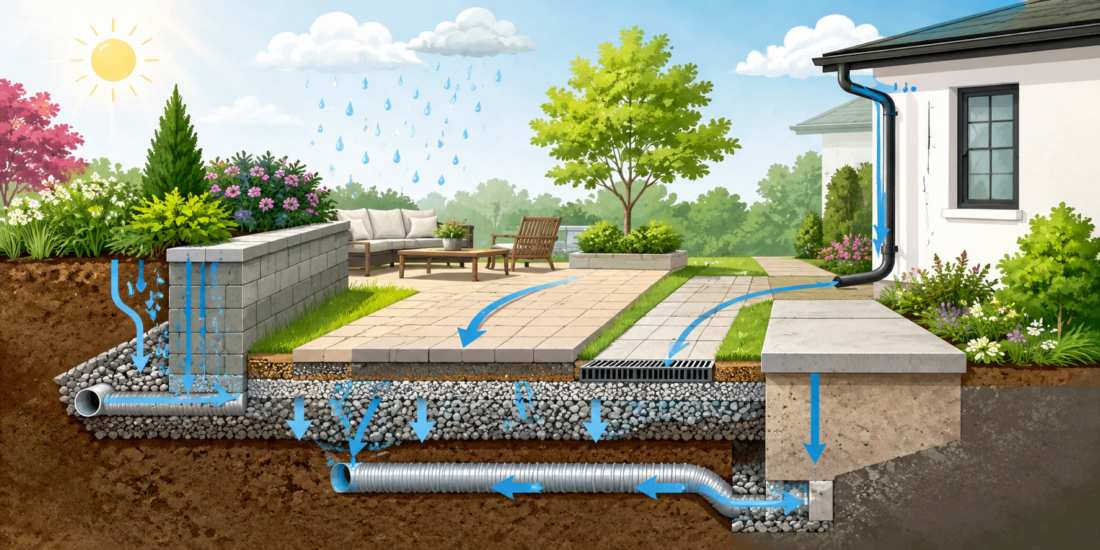
Another oversight involves neglecting subsurface drainage. Surface runoff is only part of the equation. Water can infiltrate soil beneath patios, driveways, and retaining walls. Without drainage layers, gravel bases, or drainage pipes where appropriate, moisture can remain trapped and gradually weaken the structure.
Retaining walls frequently suffer when drainage systems behind them are reduced or eliminated to save money. A wall may look perfectly strong during construction, but hidden water pressure can build over months or years. The result is often a structure that slowly shifts until repairs become unavoidable.
Some projects also fail to account for neighboring features. Downspouts, irrigation systems, roof runoff, and nearby slopes all influence how water travels across a property. Solving drainage in one location while creating a problem elsewhere is surprisingly common.
Strategies That Help Prevent Erosion and Structural Damage
Successful water management starts with understanding how runoff naturally moves across the site. Careful planning allows designers and contractors to work with those patterns rather than against them.Proper grading remains one of the most effective tools. Patios, driveways, and walkways should be constructed with subtle slopes that encourage water to flow away from structures. These slopes are often barely noticeable to the eye but make a significant difference in performance.
Permeable paving systems can also help. Unlike traditional solid surfaces, permeable materials allow water to pass through openings and into specially designed base layers. This reduces runoff while helping groundwater recharge naturally.
Drainage channels, catch basins, and strategically placed drains provide additional protection in areas that receive heavy rainfall or concentrated runoff. When installed correctly, these systems capture water before it can accumulate and cause damage.
Retaining walls benefit from drainage stone, filter fabric, and drainage pipes installed behind the structure. These components help relieve hydrostatic pressure and allow water to escape safely rather than building up behind the wall.
Regular maintenance is equally important. Leaves, sediment, and debris can clog drains and alter water flow patterns. A drainage system that worked perfectly when installed may become far less effective if neglected.
Going With the Flow
Hardscaping projects are often viewed as investments in appearance, functionality, and property value. What is less visible—but no less important—is the network of drainage decisions supporting those improvements. Effective water management protects driveways from settling, patios from pooling, retaining walls from excessive pressure, and foundations from moisture-related issues.When drainage receives the same level of attention as materials and design, outdoor spaces tend to remain safer, stronger, and more attractive for years to come. Water will always move across a property. The real question is whether it follows a planned route or decides to create one of its own. History suggests that giving water too much creative freedom rarely ends well.
Article kindly provided by hugosconcrete.com