Retaining walls are often treated as purely practical structures, built to hold soil where gravity would rather see it elsewhere. That job matters. A poorly supported slope can create drainage problems, erosion, unusable ground, and a garden that behaves less like an outdoor room and more like a slow-moving landslide with decorative shrubs. Yet a well-designed retaining wall can do far more than keep soil in line. It can define space, create rhythm, introduce texture, and turn awkward changes in elevation into some of the most attractive parts of a landscape.
Turning Slopes Into Usable Rooms
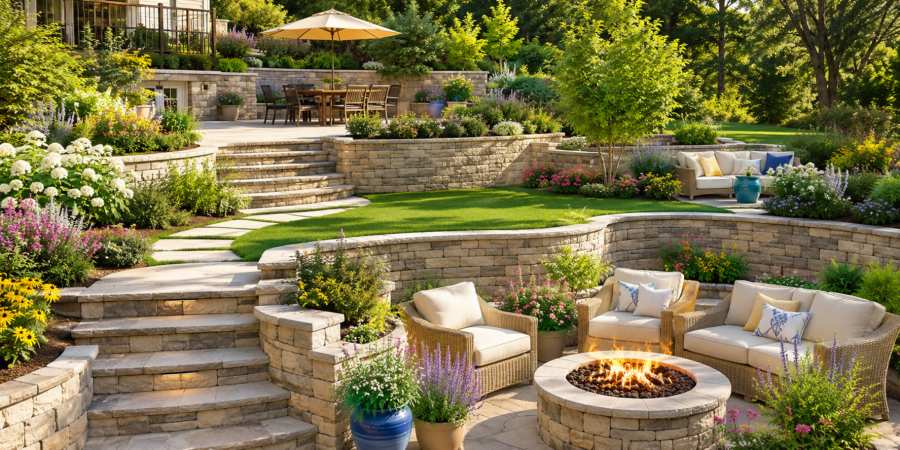
Sloped gardens often contain more potential than they first reveal. The problem is that potential may be standing at a 30-degree angle, which is not ideal for dining chairs, children’s play areas, or anyone carrying a tray of drinks with misplaced confidence. Retaining walls make it possible to carve level spaces out of difficult ground, creating terraces that can serve different purposes.One level might become a paved seating area, another a raised lawn, and another a planted border filled with grasses, shrubs, or small trees. Instead of one steep, hard-to-use incline, the garden becomes a sequence of outdoor spaces. Each level has a purpose, and each wall helps guide movement through the site. Steps, paths, and landings can be integrated into the design so the finished result feels intentional rather than patched together after the slope won an argument.
This approach is especially useful on compact properties. A retaining wall can transform a narrow or uneven yard into a series of practical zones without making the area feel crowded. The wall becomes part of the layout, not merely a barrier. With thoughtful proportions, the change in height can make the space feel more interesting, giving the garden depth and structure.
Materials That Set the Mood
The material chosen for a retaining wall has a major effect on the character of the landscape. Natural stone brings variation, texture, and a sense of permanence. Concrete blocks offer clean lines and consistency, especially useful for modern designs. Timber can feel warm and informal, although it may require more maintenance over time. Poured concrete can look sleek and architectural when finished well, but less charming if treated as an afterthought wearing a grey overcoat.Material choice should relate to the house, surrounding hardscaping, and intended use of the area. A rustic stone wall may suit a garden with informal planting and winding paths, while smooth concrete or modular blocks may work better alongside contemporary paving, outdoor kitchens, or geometric planting beds. The goal is not simply to pick something strong enough to do the job. The goal is to choose a material that supports the visual language of the whole outdoor space.
Creating Visual Interest With Height Changes
A completely flat garden can be attractive, but carefully managed changes in elevation often create a stronger sense of character. Retaining walls help introduce layers into a landscape, drawing the eye through the space and encouraging exploration.Raised planting beds are one of the simplest examples. By lifting plants above ground level, a retaining wall makes flowers, shrubs, and ornamental grasses more visible. This can be particularly valuable in larger gardens where low-growing plants may otherwise disappear into the background. The wall itself also contributes texture and contrast, becoming part of the visual composition rather than something hidden behind vegetation.
Height differences can also help frame focal points. A raised terrace overlooking a lawn creates a natural viewing platform. A wall positioned around a fire pit area can make the space feel more intimate and enclosed. Even a modest elevation change can create the impression that a garden contains multiple destinations rather than one continuous open area.
When lighting is added, retaining walls become even more effective design features. Integrated lighting can highlight stone textures, improve safety on steps, and create atmosphere after dark. A wall that appears understated during the day may become one of the most striking elements in the landscape once evening arrives.
Beyond Soil Retention
Retaining walls are surprisingly versatile. While their primary role may involve supporting earth, they can also perform several secondary functions that improve the usability of an outdoor space.Common creative applications include:
- Built-in seating around patios and gathering areas
- Raised planters for flowers, herbs, and shrubs
- Borders that separate different landscape zones
- Privacy features when combined with screening plants
- Decorative backdrops for water features or sculptures
This efficiency becomes particularly valuable on smaller properties where every square foot matters. A wall that supports a slope while also providing seating may quietly become the hardest-working feature in the garden.
The Importance of Getting the Structure Right
Although retaining walls can be beautiful, they remain engineering structures. Their appearance should never come at the expense of proper construction. Drainage, soil conditions, wall height, load requirements, and foundation preparation all influence long-term performance.A wall that looks impressive on installation day but begins leaning a few years later quickly loses its appeal. Water pressure behind retaining walls is one of the most common causes of failure, which is why proper drainage systems are essential. Gravel backfill, drainage pipes, and appropriate construction methods help ensure the wall continues performing as intended.
For larger walls or particularly challenging sites, professional design and engineering input may be necessary. While many landscape features can tolerate minor mistakes, retaining walls tend to have stronger opinions about structural shortcuts.
Holding Ground in More Ways Than One
Retaining walls occupy a unique position in landscape design because they combine function and aesthetics so effectively. They solve practical problems, create usable space, improve circulation, support planting schemes, and contribute visual structure that can define an entire property.When viewed solely as structural necessities, retaining walls are often reduced to the minimum required solution. When treated as design opportunities, they become features that shape the landscape experience itself. A well-planned wall does not merely hold back soil. It helps organize outdoor living, adds character to challenging sites, and transforms difficult terrain into a space people genuinely enjoy using. In many gardens, that quiet combination of strength and style is what allows everything else to stand on solid ground.
Article kindly provided by kairoslandscapes.com